• Which the release of FS2020 we see an explosition of activity on the forun and of course we are very happy to see this. But having all questions about FS2020 in one forum becomes a bit messy. So therefore we would like to ask you all to use the following guidelines when posting your questions:

    • Tag FS2020 specific questions with the MSFS2020 tag.
    • Questions about making 3D assets can be posted in the 3D asset design forum. Either post them in the subforum of the modelling tool you use or in the general forum if they are general.
    • Questions about aircraft design can be posted in the Aircraft design forum
    • Questions about airport design can be posted in the FS2020 airport design forum. Once airport development tools have been updated for FS2020 you can post tool speciifc questions in the subforums of those tools as well of course.
    • Questions about terrain design can be posted in the FS2020 terrain design forum.
    • Questions about SimConnect can be posted in the SimConnect forum.

    Any other question that is not specific to an aspect of development or tool can be posted in the General chat forum.

    By following these guidelines we make sure that the forums remain easy to read for everybody and also that the right people can find your post to answer it.

3D Model Size

Messages
30
Country
us-oregon
I am using ModelConverterX (MCX) to convert a couple of FSX models to 3D model objects to use as background scenery in an MSFS video. I have permission from the model developer to do so. MCX creates the 3D models OK, and I can import them into MSFS as scenery objects. But there is an issue I'm wondering if there is a solution for. I don't find a way to contact the developer on www.scenerydesign.org, so maybe somebody here has an answer.

The original FSX models are detailed. The simobjects folder in FSX is 804 MB on one plane, and 1.7 GB on the other plane. The 3D object file MCX creates from the larger one is 250 MB. Is there a practical/simple way to reduce the size of the 3D object out of MCX? Is there some kind of program code that can be eliminated (animation?) from the FSX source, since all I want is a "static display" 3D model of the exterior of the plane. If I delete all of the interior objects in a 3D model editor (like instruments, seats, structure) will it bring down the size of the 3D model significantly? What is causing the output from MCX to be so large, and is there a way to reduce it?

Thanks for whatever help you can provide.
 
Hi,

Do the objects have level of details? In that case you could try to drop one or two levels of detail. That is a good way to reduce the complexity. You can do some from the LOD Creator in MCX.

In the animation editor you can remove animations by fixing them at a certain keyframe. But I don't think that will reduce the size a lot.

Btw, I'm the author of MCX :)
 
I am new to MCX so is there a video or instructions posted somewhere on how to reduce the level of details? To be honest, I am not the "programmer". I'm working with a person in Japan who is developing the "scenery" for me to create some videos from. He doesn't speak English so I am doing the legwork. He has managed to get them into MSFS, but adding 250+ meg to his addon scenery would be problematic. He is familiar with MCX so may know how to do what you suggest.
 
Last edited:
Hi, if those files are copies of the CR1 Champ and Trimotor, it seems odd that you'd have authorization to post a link to the developers payware at an unsecured Dropbox.

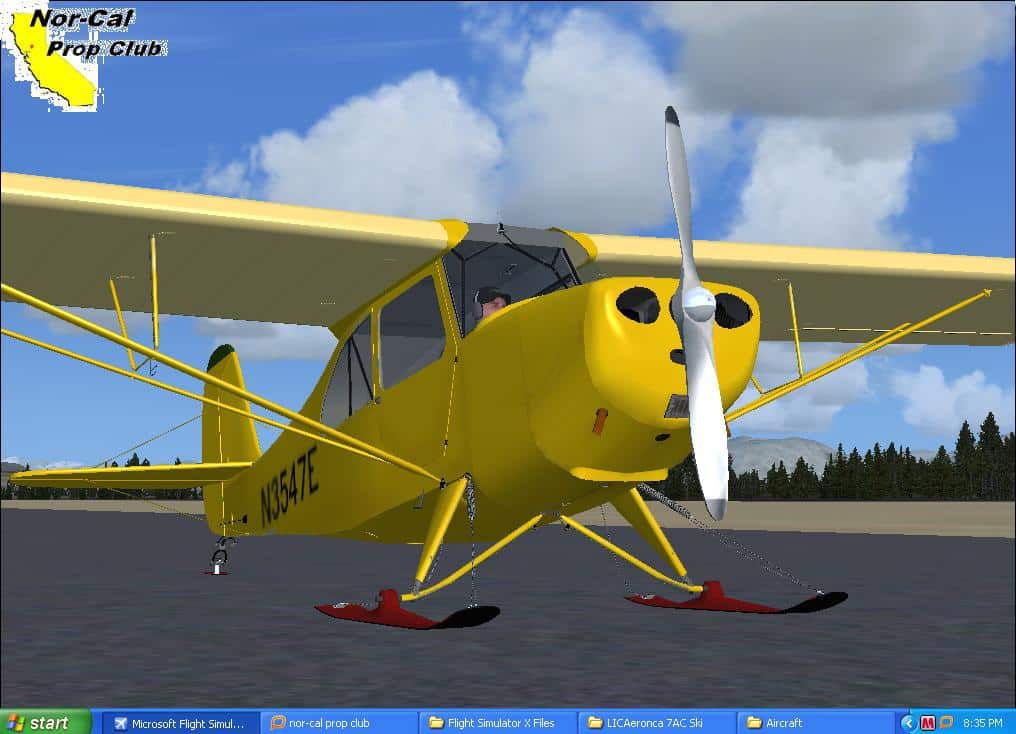
You'd probably have better luck with the Nor_Cal Prop Club freeware version of the Champ, anyway, 13 megabytes compared to 181. I can't find any "official" link, but here is someone sharing it:

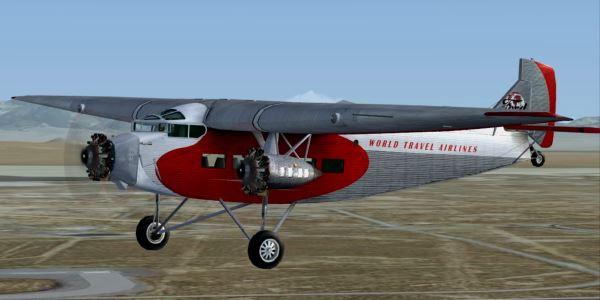
Here is a link to a conversion of the original FS9 Trimotor, you're certain to be better off, without all that full interior cabin detail:

I checked both packages and there is no requirement against sharing or editing.
 
The manual that comes with MCX explains how the different editors work. I have made some video tutorials as well, but not of each editor.

This is an old tutorial of the animation editor. The form might look a bit different now in the current version, but the functioning is still the same basically:

 
Back
Top